
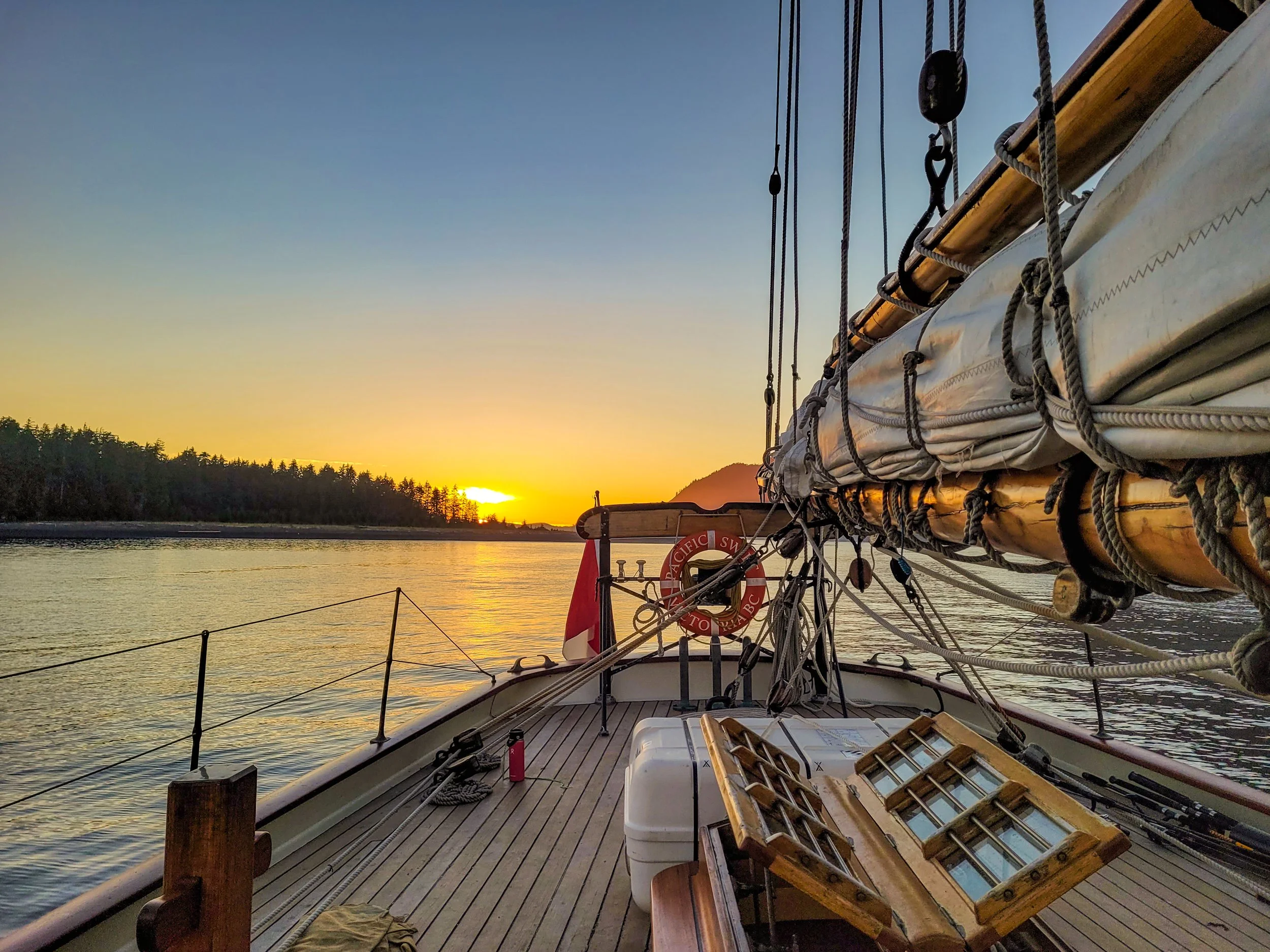
Special Dietary Needs
SALTS has a very good history of accommodating the special dietary needs of trainees on board our ships; however, it is important to understand that on a traditional tall ship there are some limitations. Although it is rare, some severe conditions cannot be accommodated safely, so it is important that any trainees with significant medical or severe dietary restrictions are identified and reported to our booking department as early as possible so we can assess our ability to accommodate and avoid disappointment. We hope the following information is helpful in preparing trainees with special dietary needs for a SALTS Trip.
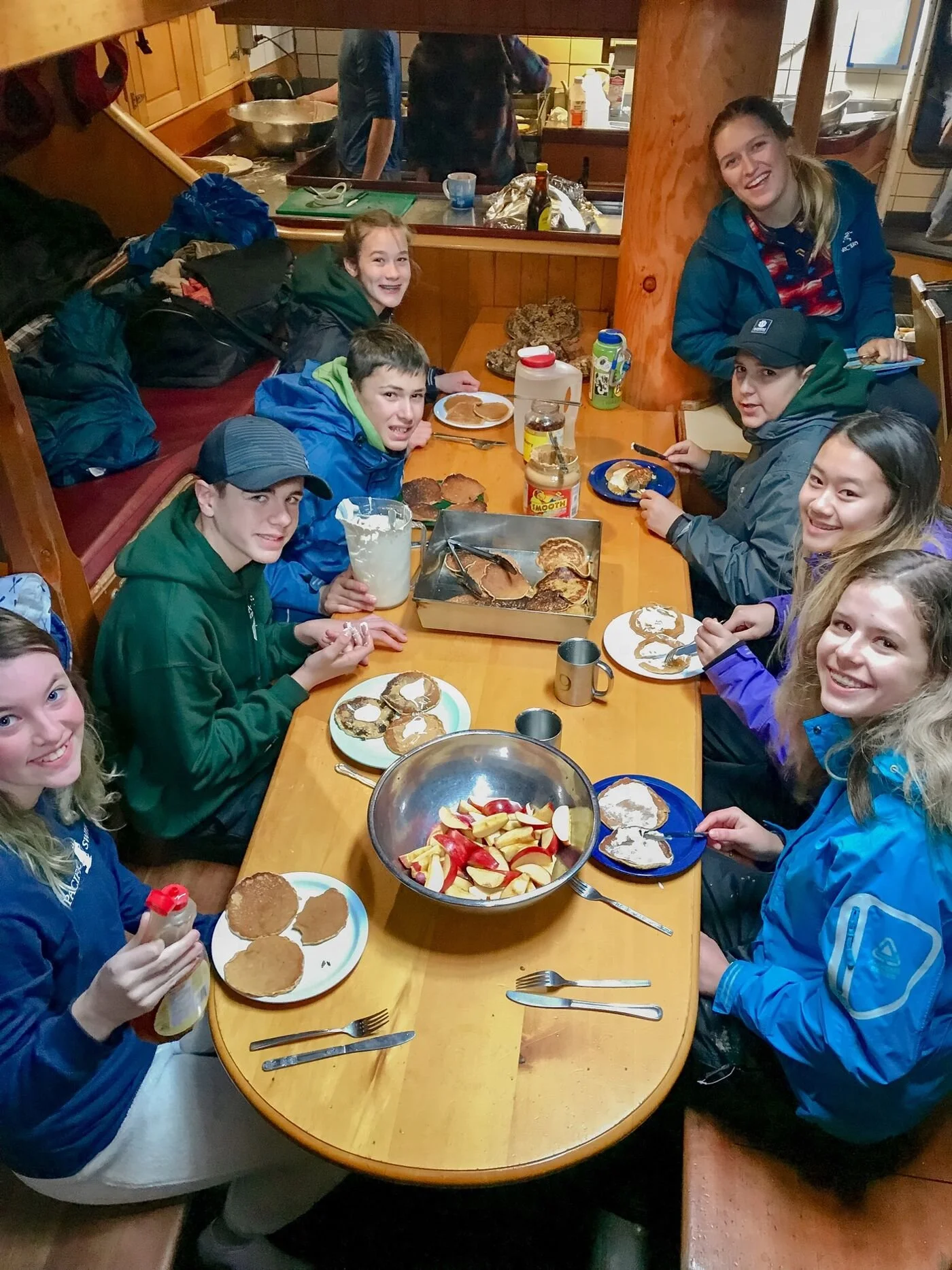
SALTS ships are fully equipped to provide satisfying meals, but storage and preparation space are very limited. Trainees will often work alongside the ship’s Cook to help prepare meals and all take turns washing dishes and cleaning the ship’s galley (kitchen). A few weeks prior to the trip, the ship’s Cook will receive a list of special dietary details from which they will plan meals and purchase ingredients for the trip. Please ensure that the SALTS office has very clear notes about all special dietary requirements. Trainees must enter the following details in the trainee profile section of their online registration:
What the medical condition or food allergy is. Please be specific about trigger foods.
The severity of the condition/allergy – mild, moderate, severe, anaphylactic/life threatening.
The type of reaction(s) experienced – e.g. hives, nausea, breathing difficulty, etc.
Whether the reaction is triggered by ingestion only, or if contact and/or smell can be triggers. If the trainee reacts to dairy products, are they ok if there is dairy in baked items?
Whether trace amounts or cross contamination present a problem for the trainee? Please note that while our Cooks do their best, cross contamination cannot be completely eliminated on board due to the very limited preparation space. If this is a concern, please call our office at 1-888-383-6811.
Any medications that the trainee will be bringing aboard the vessel – e.g. digestive enzymes, antihistamines, Epi-Pens, inhalers, topical cortisone etc.
To provide energy to a large group of young people engaged in vigorous activities, meals will often lean toward a large carbohydrate portion. Water and juice are provided with each meal. Here are the typical nutritional elements and examples of meals while aboard the ship:
Breakfast (between 7 – 8am): Usually grains or starch foods - ex. muffins, baked hashbrowns, cereals or porridge with milk, fruit and some protein
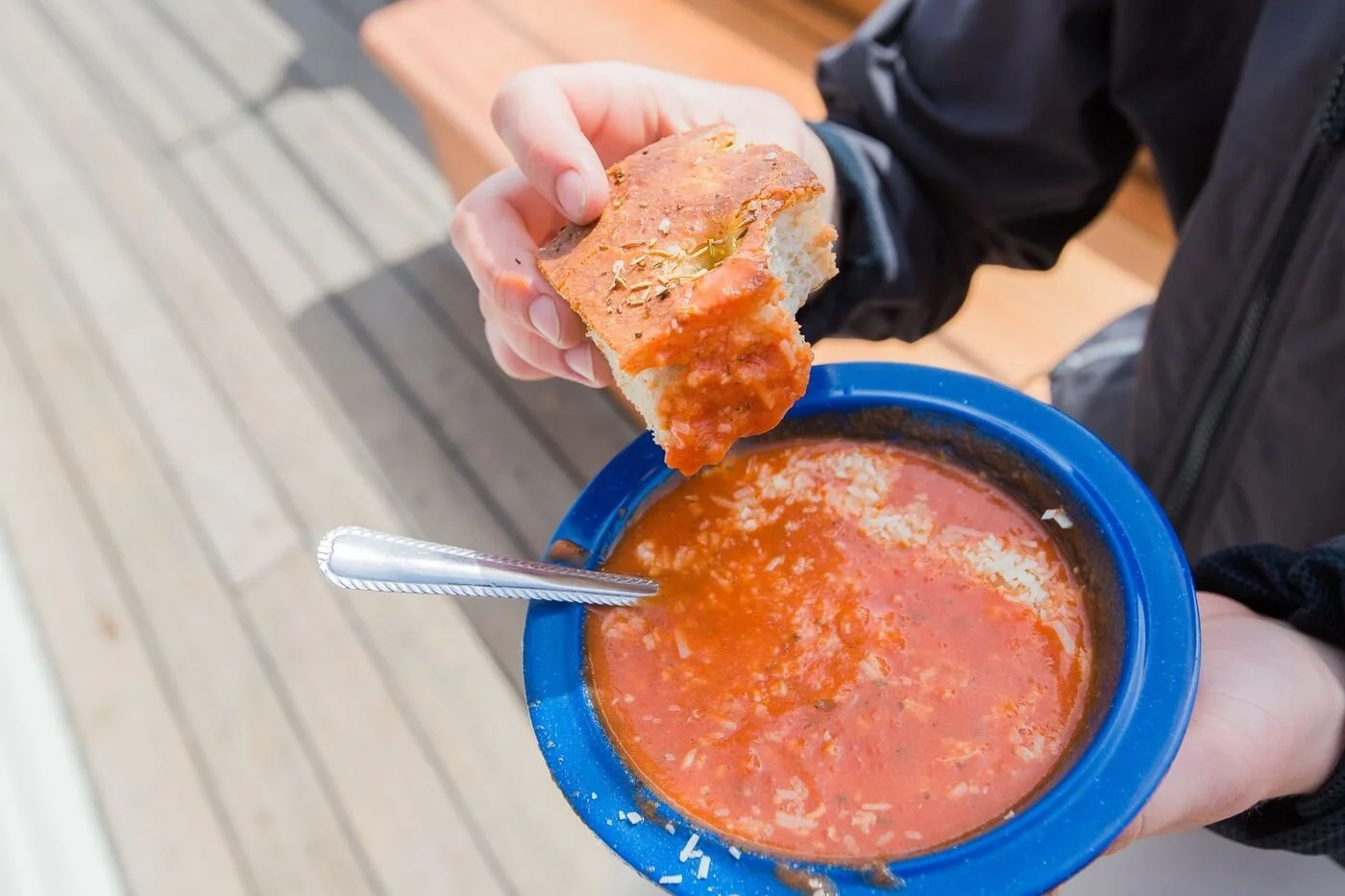
Lunch (11am - 1pm): A grain/starch, vegetables & protein - ex. hearty soup with focaccia & veggie sticks
Dinner (5 – 6pm): A grain/starch, vegetables and protein (sometimes also fruit) – ex. stir-fry on noodles, coconut curry on rice, enchiladas and garden salad, chicken pot pie with spinach salad
Mug-up snack (around 9pm): A sweet treat and a hot drink – ex. brownies, fruit crisp, chai tea, hot chocolate
While we will do our best to accommodate dietary needs, we ask that trainees only indicate dietary requirements and not food preferences, as these accommodations are both time consuming and costly. In some instances, we may ask trainees with significant dietary restrictions to bring some of their own ingredients, snacks, or prepared meals. Please let the SALTS office know ahead of time if anyone is planning to bring additional food items so the ship’s Cook can be notified, as space is very tight and cold storage is extremely limited.
For those with Celiac or gluten intolerance, please see our Gluten Free Dietary Needs information.
Fair winds!

Gluten Free Dietary Needs
SALTS strives to accommodate special dietary needs; however, it is important to understand that aboard a traditional tall ship there are significant limitations. Although it is rare, it may not be possible to safely accommodate very critical dietary conditions.
Because exposure to airborne gluten particles and the possibility of cross contamination is a serious risk, the following information is provided to help those who require a gluten free diet decide if a SALTS trip is a suitable activity.
While we understand that any amount of gluten is detrimental for a person with celiac disease or severe gluten sensitivity, we have found there is a wide range in the severity of immediate symptoms and the amount of risk individuals are willing to tolerate, so we don't assume everyone has the same approach.
SALTS’ cooks are knowledgeable and conscientious about gluten free food preparation; however, the ship's galley is a very small space that is accessible to participants and volunteers, who often help with basic tasks. Unlike a commercial kitchen in a camp setting, it is not possible to maintain dedicated gluten free dishes, pots, pans, or cutting boards.
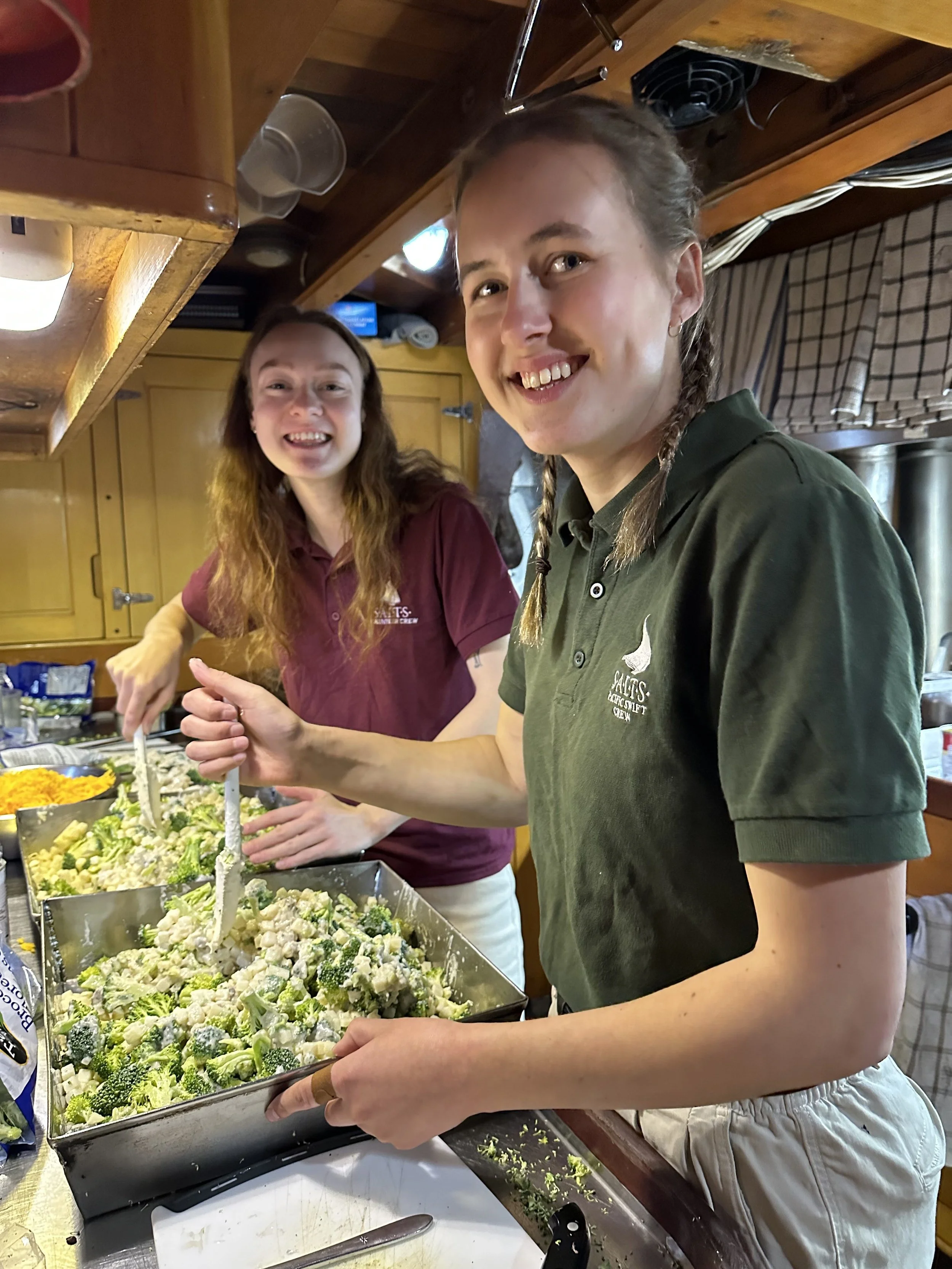
The ship’s galley is part of a multi-purpose area called the “hold”, where trainees sleep, eat, have lessons, and gather each evening for mug-up; (a time of singing, games, and discussions). While these daily activities are going on, the cook will be baking bread, muffins, buns, and desserts with wheat flour. Bulk flour and sugar are stored in built-in wooden bins which, when opened and closed, produce airborne flour particles that circulate and settle throughout the galley and hold. Efforts are made to prevent cross contamination by stowing gluten-free items in a separate storage locker where GF flour and sugar are kept in zip sealed bags, and by preparing and serving GF foods before regular items.
Basic gluten free options such as pasta, oats and wraps will be provided; however, if a participant wishes to bring some items or their preferred brand, we ask that they let us know at least two weeks ahead, before the cook finalizes their food order for the trip.
Those who are satisfied with the dietary services described are asked to provide a statement that they understand the limitations of the SALTS environment and accept the risk of gluten exposure during the trip.
With this awareness, we ask that those with celiac disease (and their parents, if applicable) carefully consider whether a SALTS trip is a suitable activity. We are happy to answer questions by email registration@salts.ca or phone 250-383-6811, ext. 102.