


Frequently Asked Questions
Below are frequently asked questions about SALTS voyages - scroll down to see the answers.- What is SALTS?
- What is sail training?
- How safe is the boat?
- When and where do I board and disembark the ship?
- How can I arrange transportation and accommodations for before/after the voyage?
- What about rough seas and seasickness?
- What are the berths like?
- Are there showers on board?
- Can you accommodate vegetarian or special dietary needs?
- How often do we go ashore?
- Who will be on board my sailing trip?
- Do I need sailing experience?
- What are the physical and mental health requirements?
- How much will we sail?
- Can I recharge my camera or phone battery?
- Do I need money on the trip? How much?
- Do I really need rubber boots?
- Can I fish?
- Does my SALTS voyage qualify towards the Duke of Edinburgh Award?
- Can I bring my musical instrument?
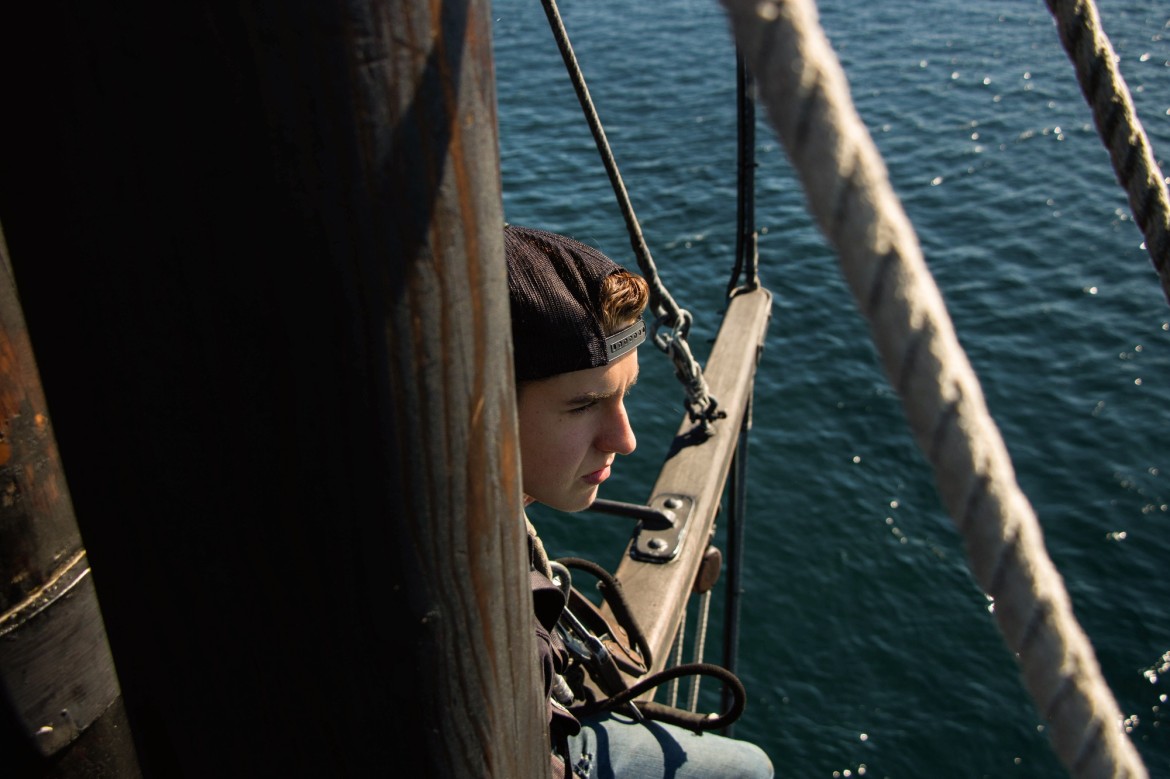
What is SALTS?
SALTS, the Sail and Life Training Society, has been engaging and challenging youth through sail training since 1974. Hundreds of young people sail aboard our schooners Pacific Swift and Pacific Grace each year. We sail with school and youth groups each spring and fall. Individual young people can join our summer program for ten-day voyages that collectively circumnavigate Vancouver Island.
SALTS is a Christian-based charity that welcomes trainees from all faiths and walks of life, and respects the diversity that exists within the ship's company. In all aspects of our programs, emphasis is on creating an environment where young people are esteemed and listened to when they talk.
What is sail training?
Sail training is more than learning how to sail. Sail training is about character development and personal growth in the context of a close-knit community on board the ship. It provides intensive life experiences to stimulate leadership development, team building, a heightened awareness of nature, and an appreciation of historical sailing vessels. Sail training develops confidence, environmental stewardship, courage, strength, and humility. In the process, trainees learn all aspects of sailing the ship, such as navigation, sailing terms, parts of the ship, wheel operation, galley chores, line and sail handling, knots, etc.
How safe is the boat?
SALTS has been taking young people to sea since 1974 and our sail training safety record is second to none in the industry. Our ships have safely travelled over 365,000 nautical miles (17 times the earth’s circumference). Visit our Safety page for more details about how SALTS prioritizes safety through our ships, our crew and our programs.
When and where do I board and disembark the ship?
All trainees are provided with detailed boarding and disembarking information specific to their program and trip.
For individuals on a summer trip, boarding times are typically 11:00am for Victoria departures and 1:00pm for departures outside Victoria. The expected disembarking time for all trips is 11:30am. Each trainee will receive an email link to their trip-specific boarding details and travel tips which will also be posted on the Summer Trip Preparation page. Please be aware that times are subject to change in response to schedule changes by airline and other travel providers.
Spring and fall group trips typically arrive at the dock at 10:00 am on the first day of the voyage to begin boarding at 10:30 am. Vessels return to the dock by 3:00 pm to disembark by 3:30 pm (unless otherwise arranged with the crew) on the last day of the sailing. Boarding and disembarking will take place at the SALTS' dock at Swift Street Landing in Victoria's Upper Harbour.
How can I arrange transportation and accommodation for before/after the voyage?
Individual trainees (and their families) are responsible for making their own travel arrangements; however, SALTS will post basic information and links to transportation and accommodations providers that service the boarding and disembarking locations of each trip on the Trip Planner pages of our website. Trainees on 10-day summer trips who are interested in sharing travel information or connecting with other trainees registered for the same trip can join the Travel Share List by checking the box on the Trainee Profile Form.
For group trips, the organizer can refer to their Group Organizer's Checklist for suggestions.
What about rough seas and seasickness?
Trips that take place within the protected waters of the Gulf Islands and on the east side of Vancouver Island are less likely to encounter rough seas, however, everyone's sensitivity to motion sickness is different and seasickness may be encountered any time one ventures out on the water. Some of our summer trips navigate more open waters such as the Hecate Strait and the west coast of Vancouver Island where seasickness is common; however, most trainees typically become acclimated and comfortable on the larger seas after a few days. Trainees who experience seasickness often look back on it as a challenge they overcame and that it brought them closer to their shipmates. Many report that it wouldn't deter them from sailing again and that it was well worth it to experience the rugged and beautiful west coast! If you know that you are prone to seasickness, you should check with a pharmacist or your physician for medicinal recommendations.
What are the berths like?
The ship has two main sleeping areas for trainees below deck separated by a bulkhead door: the "fo'c'sle" and the “main hold” (which is also open to the galley area). These multipurpose areas each have bunks, a table for dining, and a single occupancy bathroom ("head") with sink and toilet. Each berth is a single bunk with a mattress. Bunks are arranged in three tiers (not directly over each other) on each side of the ship.
Are there showers on board?
There are no showers on board, but swimming and bathing in the ocean or freshwater swimming areas we visit is an option. This is why it's important any cleansing product you bring is biodegradable such as "camp soap" or "wilderness wash".
Can you accommodate vegetarian or special dietary needs?
SALTS has a very good history of accommodating the special dietary needs of trainees on board our ships. With sufficient notice our cooks are able to accommodate vegetarian as well as religious and most medical dietary needs. Dietary requests must be indicated as early as possible through the online Trainee Profile Form or by contacting our office. More restrictive dietary requests will be considered on a case-by-case and trip-by-trip basis through consultation with SALTS' staff and medical advisors.
Those with severe medical dietary restrictions must be aware that the possibility of cross-contamination cannot be completely eliminated within the very confined space of the ship’s galley. It is therefore important to contact the SALTS booking department to discuss the trainee's needs and what food service accommodations are possible in order to make an informed decision about participation in a SALTS trip.
How often do we go ashore?
We try to get ashore once per day, weather permitting.
Who will be on board my sailing trip?
On a individual trips, each ship can accommodate 28 trainees with approximately even numbers of males and females in separate holds (compartments) of the boat. SALTS welcomes trainees from all backgrounds, beliefs, and walks of life.
On group trips, each ship can accommodate 30 trainees with approximately even numbers of males and females in separate holds (compartments) of the boat. The youth and leader participants that sail are determined by the organization and group trip organizer.
Crew supervise, instruct and lead sail training activities and shore excursions.
Do I need sailing experience?
No, anyone can sail on one of our trips provided they meet the program age and Physical and Mental Fitness Requirements. We do all the training required. Those with sailing experience can gain more skills and add to their sea time record in their SALTS Log Book.
What are the physical or mental health requirements?
Some conditions, as described in our Physical and Mental Fitness Policy, may preclude participation in a SALTS voyage. All medical and mental health conditions must be reported as well as any medications being brought on board must be reviewed and accepted by SALTS prior to finalizing the trip assignment.
How much will we sail?
We sail as much as the wind and weather will allow.
Can I recharge my camera or phone battery?
There are only a few electrical outlets which are shared by everyone on board, so it’s best to have a backup power pack in case you don’t have access to an outlet when your battery is low. Cell phones must be in AIRPLANE MODE and only used as a camera for the duration of the trip, so they shouldn’t need to be charged very often. Other electronics and appliances (e.g. hair dryers, computers, etc.) should be left at home.
Do I need money on the trip? How much?
Other than to buy SALTS merchandise sold on board, you will not need money during the voyage. For purchasing merch on board trips, we accept cash or cheque (payable to SALTS). Merch purchases by VISA/Mastercard can be arranged through the SALTS office by phone (250-383-6811 ext. 5) or by visiting the SALTS office in person. However, you will need to be prepared for expenses before and after your voyage, such as travel or meals, based on your individual (or group’s) plans. We recommend that you not carry large amounts of cash.
Do I really need rubber boots?
Yes. Boots are not only for when it's raining, but also for when the decks are being hosed down each morning. It is possible to have lengthy rainy periods, even during the summer season, and once shoes get wet, they could stay that way for the entire trip. Expensive deck boots are not needed; plain ‘gum boots’ or short rubber boots will work just fine.
Can I fish?
If the trip route and schedule allows, and the Captain agrees, it is possible. You must have the appropriate fishing license and all regulations must be followed. Fly-fishing cannot be accommodated. If you intend to bring fishing equipment, know that you must stow your gear on your bunk as storage on board is limited and objects on the floor are tripping hazards. As with any personal items brought on board, SALTS cannot be responsible for damage or loss.
For group trips, in addition to the requirements above, you should also have the permission from your trip leader.
Does my SALTS voyage qualify toward the Duke of Edinburgh Award?
Some parts of a SALTS voyage can be used to meet some of the skills and physical recreation elements of the Duke of Edinburgh Award, as well as the Gold Project but not the Adventurous Journey. Contact your local Duke of Edinburgh Award Leader or Division Office to confirm suitability prior to your trip. The Duke of Ed Award encourages self directed goal setting, decision making and perseverance so it's the participant's responsibility to ensure that their activities meet the qualifications. We ask that you notify us in advance if you plan to fulfill Duke of Ed objectives during your trip. You must discuss your objectives with your Watch Officer at the very beginning of the trip , let them know what elements you are asking them to assess and how they will report the assessment.
Can I bring my musical instrument?
Please contact us in advance to make these arrangements unless your instrument can fit into your pocket. Music is an important part of the SALTS experience and it may be possible to borrow one of the ship's instruments. If you do bring your own instrument you must be prepared to stow it on your bunk where it could be subject to jostling by the ship's movement or others climbing over. As with any personal items brought on board, SALTS cannot be responsible for damage or loss.